WITH EMPLOYEES
9,393
U.S. CENSUS CBP 2023
 U.S. FORMATION DATA & GUIDES
 To start a landscaping business in California you'll file Articles of Organization on bizfileOnline ($70) and get a free EIN from the IRS. Most crews stay unlicensed until a job reaches $1,000 in labor and materials, the Contractors State License Board's C-27 threshold since 1 January 2026; a building permit, an employee, or advertising as a contractor cancels the exemption at any price. Pesticide work adds a second credential: the Department of Pesticide Regulation's Maintenance Gardener Pest Control Business License, plus a qualified applicator on staff. Total state LLC filing: ~$70 and 1–3 business days.
585,957 new business applications in California (last 12 mo) ▲ 11% YoY
California runs two separate license systems over the same landscaping crew: a contractor board for construction and installation work, and a pesticide regulator for spraying. North Carolina is the only other pilot state that licenses landscaping through a contractor board, and it stops there; California adds a second, unrelated regulator on top. The Contractors State License Board’s C-27 classification covers landscape construction, installation, and maintenance, and requires a license once a job reaches $1,000 in combined labor and materials, a threshold Assembly Bill 1170 raised from $500 on 1 January 2026. Three things cancel that minor-work exemption regardless of price: the job needs a building permit, the crew includes anyone besides the owner, or the business advertises itself as a contractor.
That second regulator is the Department of Pesticide Regulation, and it licenses a landscaping company’s pest control work only if the spraying stays incidental to the business’s regular mowing, planting, and yard cleanup. A Maintenance Gardener Pest Control Business License runs $180 to $360 depending on where the application lands in DPR’s two-year renewal cycle, well under the fee for a full pest control business, and it comes with financial responsibility minimums ten to thirty times lower too. The business also needs a qualified applicator on staff: Subcategory Q covers non-restricted products used incidentally to gardening and needs one exam, Category B covers landscape maintenance pest control more broadly, allows restricted materials, and needs two. A crew built around spraying, not around gardening, does not fit the gardener’s license at all and needs the full Pest Control Business License instead.
The order that matters for a new LLC is entity first, credential second. CSLB and DPR both license the business by name, so the Secretary of State filing has to exist before either application goes in, and DPR will not issue the Maintenance Gardener license until a named Subcategory Q or Category B certificate holder is on the file. A company planning to grow past occasional pest control should budget for Category B from the start; adding it later means a second exam, and a gap where the work the crew is actually doing has outgrown the certificate covering it.
The two counts on the plate above split in an unusual direction here. California runs second among the ten pilot states for solo landscaping operators, behind Texas, and second for employer locations, behind Florida, yet its employer businesses carry more workers on average than Florida’s do. Fewer California landscaping companies carry payroll, and the ones that do run larger crews, which is the shape the C-27 employee trigger anticipates: once a landscaping business in California hires anyone, the contractor license and its conditions apply regardless of how small the jobs still are.
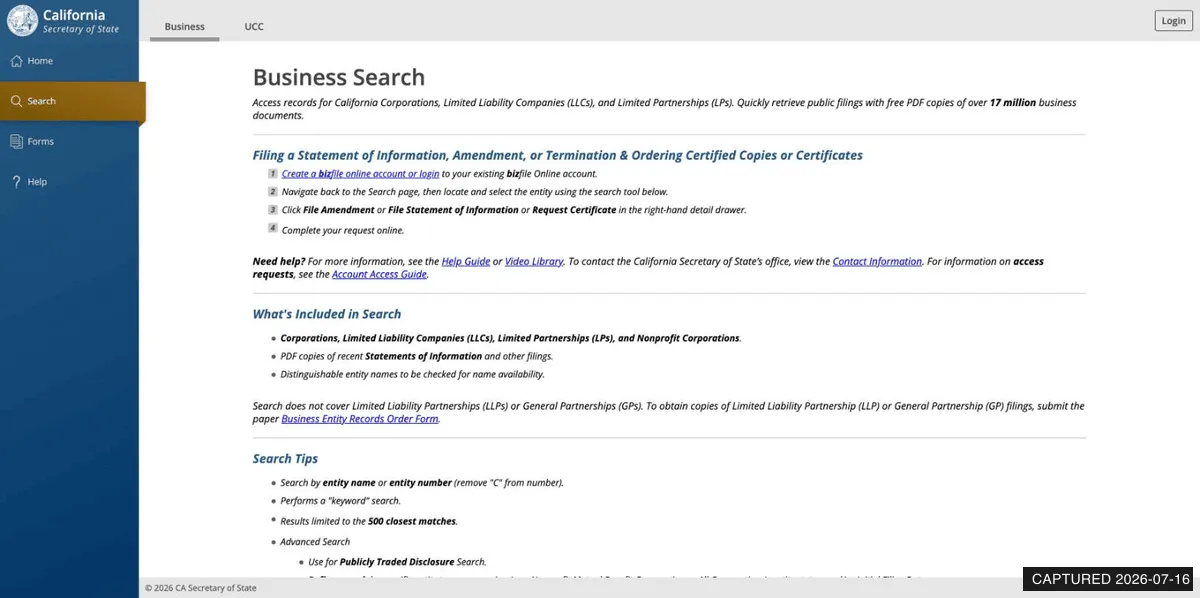
Your name must include "LLC" or "L.L.C." and be distinguishable from existing California entities. Search current records through the bizfileOnline business search before you commit to logos or domains. The Secretary of State rejects filings that conflict with an active name.
California calls the registered agent an "agent for service of process." It must be a California resident with a street address in the state or a registered corporate agent. You can serve yourself, which puts your address on the public record. A commercial agent lists theirs instead.
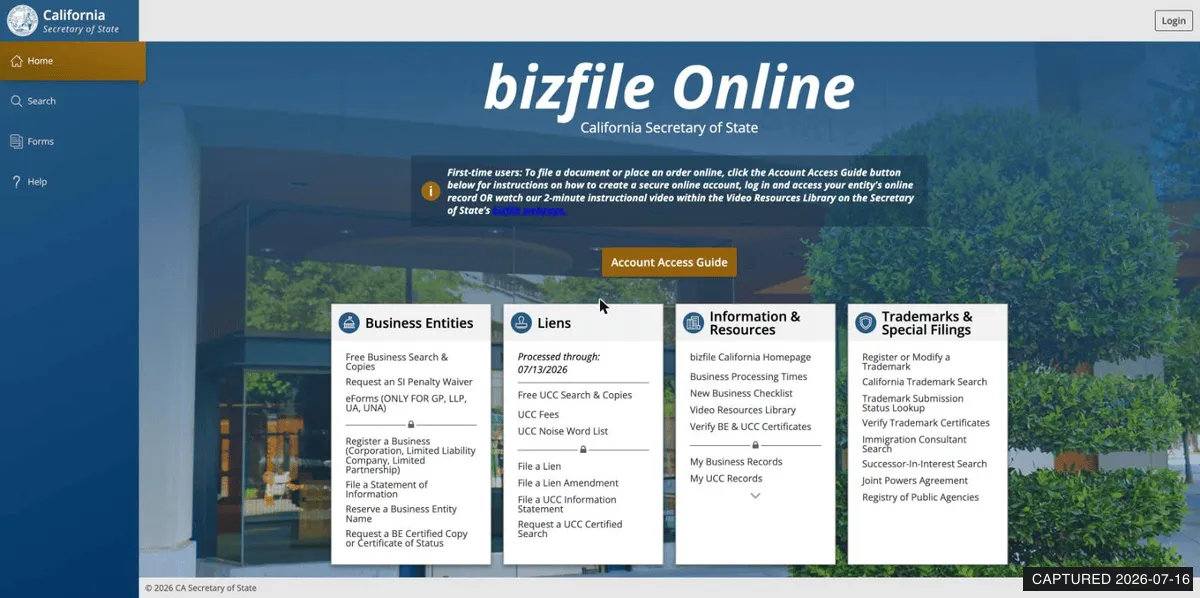
File Form LLC-1 online at bizfileOnline. First-time filers need a free bizfileOnline account before "Register a Business" is available; the site's own landing page walks new users through that Account Access Guide. From there, the state fee is $70 by card. Online filings are typically reviewed in 1–3 business days, and the state emails a free filed copy back. Paid expedite exists for urgent cases: $350 for 24-hour, $750 for same-day processing.
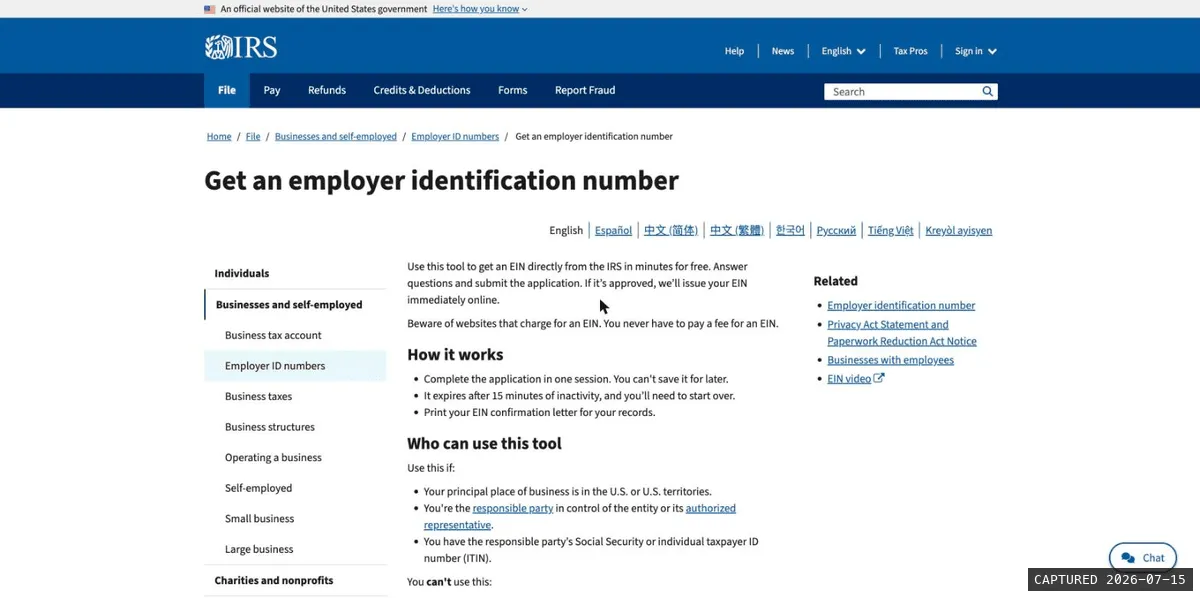
Apply for an Employer Identification Number on the IRS website once the LLC is approved. It is free and takes about ten minutes online; you need it for banking, hiring, and taxes. Ignore any site that charges for an EIN.
California law expects every LLC to maintain an operating agreement. It is not filed with the state; you keep it with your records. A single-member LLC can use a short standard agreement; multi-member LLCs should put splits and exit terms in writing.
California has no single statewide business license. Most cities require a local business license or business tax certificate before you operate, and some industries carry their own state registrations. For landscaping specifically: California licenses this trade through the Contractors State License Board's C-27 classification, covering landscape construction, installation, and maintenance work. The threshold is $1,000 in labor and materials combined, raised from $500 on 1 January 2026, and the same permit and employee conditions from B&P §7048 cancel it at any price. Pesticide work sits on a separate track: the Department of Pesticide Regulation issues a Maintenance Gardener Pest Control Business License to a crew whose pest control stays incidental to its regular gardening work, and the business must keep a qualified applicator on staff holding a Qualified Applicator Certificate, either the narrower Subcategory Q or the broader Category B.
File the Statement of Information (Form LLC-12, $20) within 90 days of formation and every two years after. Separately, the Franchise Tax Board collects a minimum $800 annual franchise tax from every California LLC. Open a dedicated business bank account with your filed articles and EIN.
Same state fee either way. The difference is your time, and whose address goes on the public record.
Only once a job passes $1,000 in combined labor and materials, the C-27 minor-work threshold Assembly Bill 1170 raised from $500 on 1 January 2026. Three things cancel the exemption at any price: the job needs a building permit, the business employs anyone to help, or the owner advertises as a contractor. A solo operator doing small unpermitted jobs alone is the case the exemption actually covers.
A Maintenance Gardener Pest Control Business License from the Department of Pesticide Regulation, priced at $180 to $360 depending on where the application lands in DPR's two-year renewal cycle, plus a qualified applicator on staff. Occasional pest control alongside regular gardening only needs the narrower Subcategory Q certificate; a crew that regularly sprays needs the broader Category B certificate and two exams instead of one.
Yes. Any California resident with a street address in the state can serve, including yourself. The agent's name and address go on the public record, and someone must be available there during business hours to accept legal documents. Those are the reasons owners hire a commercial agent.
The $70 creates the LLC, but two recurring charges follow. The Statement of Information costs $20 within 90 days and then every two years, and the Franchise Tax Board collects a minimum $800 franchise tax every year the LLC exists. Budget for the $800; it is the real cost of a California LLC.
Usually not. Third-party companies mail new California LLCs invoices that imitate state forms and charge many times the real fee. The Secretary of State publishes a customer alert about them. The state's own charges are $70 to form and $20 for the Statement of Information; pay those at bizfileOnline.
Source: BusinessFormation.us analysis of U.S. Census Bureau
County Business Patterns 2023 and Nonemployer Statistics 2023
(establishment counts, NAICS 56173), and Business Formation
Statistics (monthly applications); retrieved Jul 2026.
businessformation.us/start/landscaping-business/california/