WITH EMPLOYEES
3,242
U.S. CENSUS CBP 2023
 U.S. FORMATION DATA & GUIDES
 To start a landscaping business in Georgia you'll file Articles of Organization on eCorp ($100) and get a free EIN from the IRS. Applying pesticide to another's property for a fee needs a state pesticide contractor license: $55 a year, expiring at the end of the calendar year it was issued in with a 50% surcharge for late renewal, and at least one certified commercial applicator per category on staff. The financial responsibility the license requires does not cover damage to the plants or land being worked on. Total state LLC filing: $100 and about 5–7 business days.
272,381 new business applications in Georgia (last 12 mo) ▲ 15% YoY
Georgia is one of six pilot states where a chemical regulator claims the landscaping trade, and its Pesticide Use and Application Act of 1976 names the industry by occupation rather than leaving it to be inferred. The Department of Agriculture lists lawn care companies, landscape contractors, and tree surgeons directly among the businesses a pesticide contractor license covers, the same trigger New York and Florida use: applying any pesticide to another’s property for a fee. Georgia’s license itself runs cheap and short. It costs $55 for a single calendar year, expiring at year end regardless of when it was issued, with a 50% surcharge if renewal slips past the deadline.
The license condition worth reading twice sits in its financial responsibility rule. GAC 40-21-8 sets the floor at $25,000 bodily injury per occurrence, $10,000 property damage per occurrence with a $25,000 aggregate and a $500 deductible cap, or a surety bond of at least $20,000, and every one of those figures protects someone else’s person or property, never the plants or land the crew is actually treating. A customer whose beds die from a bad application is not who this coverage was written for. The business also needs at least one full-time certified commercial applicator per category of pesticide work it performs, a staffing condition tied to the license rather than a one-time exam.
The visible duty follows the license into the yard. At the time of a landscape application, the contractor posts a sign that has to stay up until the day after: at least 4 by 5 inches, sturdy and weather resistant, in contrasting colors, 8 to 12 inches above the ground. Golf courses get a different spec entirely, an 8 by 10 inch sign posted at the clubhouse rather than on the fairway itself. Applicator licenses run five years rather than the business license’s one, and Ornamental and Turf, the category landscaping work falls under, carries a heavier continuing education load than most: 10 hours of recertification where most other categories need 6, bankable up to 90 days before expiry, with a $25 renewal fee on top.
Georgia’s density figures pull in opposite directions more sharply than any other pilot state. It ranks 4th of 10 for solo landscaping operators, ahead of the pilot’s midpoint, but 10th, dead last, for employer locations. That six-place gap between the two ranks is the widest in the pilot; New York’s five-place gap, the next widest, does not close it. A landscaping business here is disproportionately likely to stay a one-person operation rather than grow into a company with a location and payroll, a shape that fits a license structure built around a cheap annual credential and a required in-house applicator rather than around capital-intensive contractor bonding.
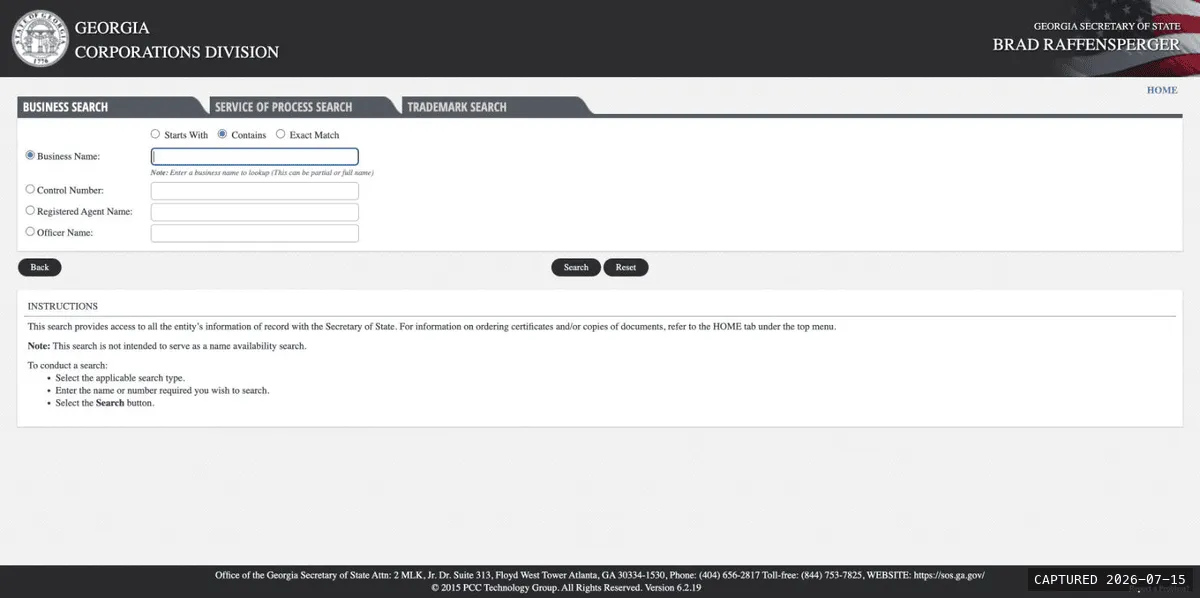
Your name must include "LLC" or "L.L.C." and be distinguishable from existing Georgia entities. Run it through the Corporations Division business search on eCorp first: it lists every registered Georgia entity by name, and the page itself notes it is not the official availability check. The Corporations Division makes that call when you file, so a close match here is your signal to pick something more distinct.
Georgia requires a registered agent with a physical street address in the state, available during business hours. You can serve yourself, which puts your address on the public record. A commercial agent keeps your home address off the filing.
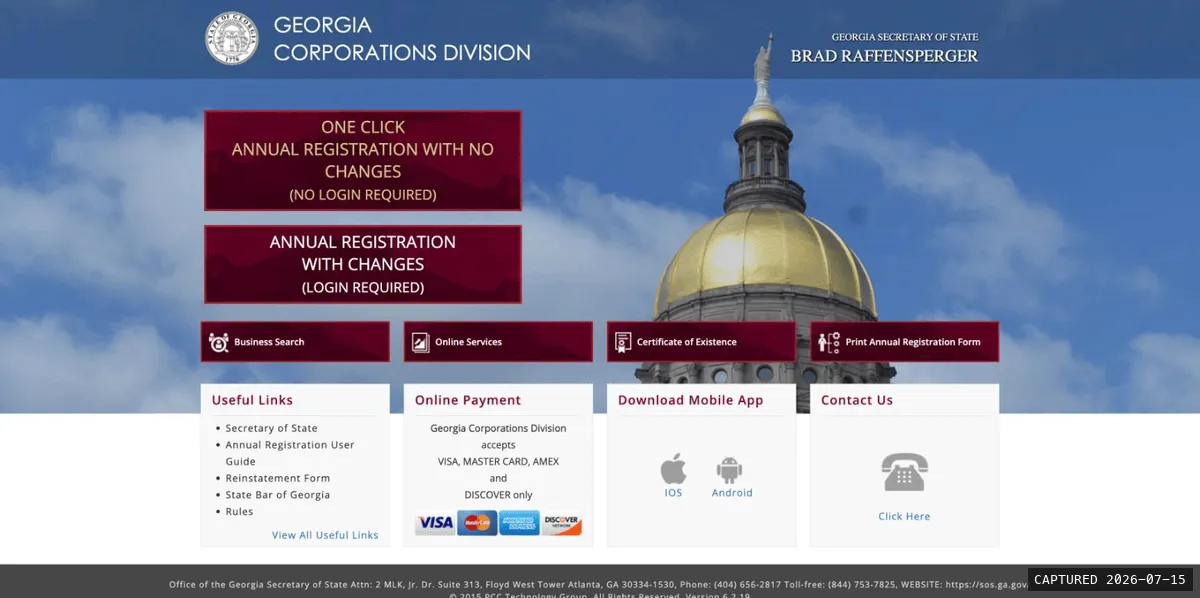
File online through the eCorp portal: from the home page, "Online Services" is the entry point, and the filing itself continues behind a user account. The online filing fee is $100, paid by card, and covers the Articles of Organization (Form CD 030). Standard online processing runs about 5–7 business days; expedited service is available for an extra fee.
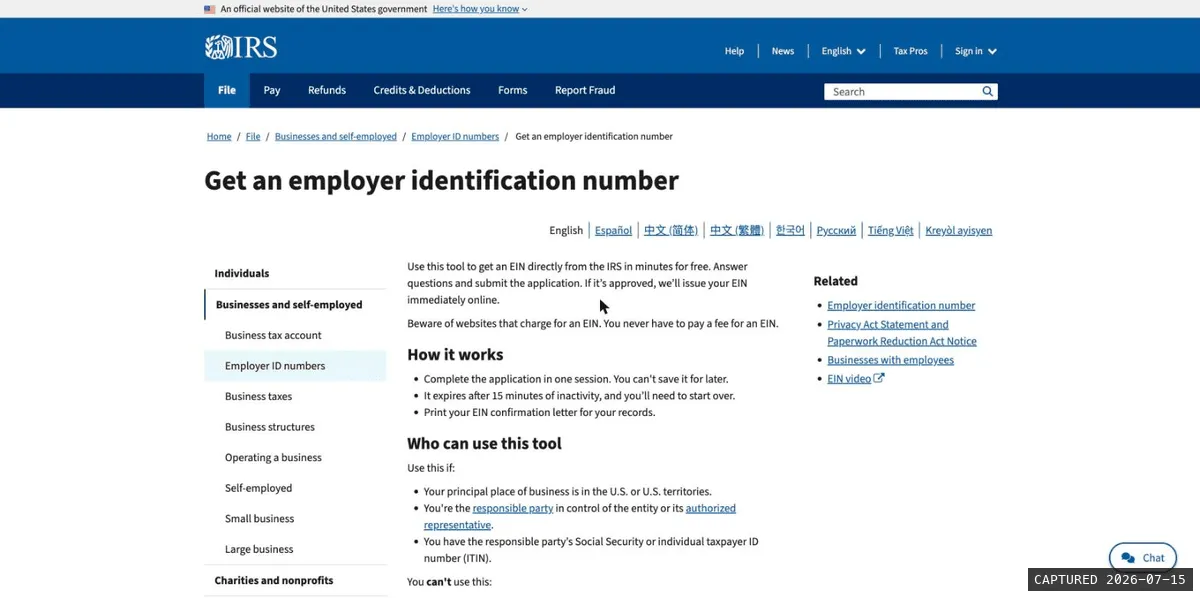
Apply for an Employer Identification Number on the IRS website once the LLC is approved. It is free and takes about ten minutes online; you need it for banking, hiring, and taxes. Ignore any site that charges for an EIN.
Georgia doesn't require an operating agreement, but it is the document banks, landlords, and partners ask for. A short standard agreement works for a single-member LLC; multi-member LLCs should put splits and exit terms in writing from day one.
Georgia has no general statewide business license; instead, nearly every city and county requires an occupation tax certificate (local business license) before you operate. For landscaping specifically: Georgia licenses the trade the moment pesticide touches someone else's property for a fee, under the Georgia Pesticide Use and Application Act of 1976. The Department of Agriculture names lawn care companies, landscape contractors, and tree surgeons directly as covered businesses. A pesticide contractor license costs $55, runs one calendar year, and expires at the end of the year it was issued in regardless of the issue date, with a 50% surcharge for late renewal. The business must employ at least one full-time certified commercial applicator per category of work it performs. Financial responsibility runs $25,000 bodily injury per occurrence, $10,000 property damage per occurrence with a $25,000 aggregate and a $500 deductible cap, or a surety bond of at least $20,000, and the cover excludes damage to the plants or land the crew is working on, the opposite of what a customer typically assumes the policy protects. At the time of a landscape application, the contractor posts a sign that stays up until the day after: at least 4 by 5 inches, sturdy and weather resistant, contrasting colors, 8 to 12 inches above the ground. A separate golf-course sign, 8 by 10 inches, posts at the clubhouse instead of the fairway. Applicator licenses run five years, and Ornamental and Turf recertification takes 10 hours where most other categories need only 6, with hours bankable up to 90 days before expiry and a $25 renewal fee.
Georgia LLCs file an annual registration with the Secretary of State between January 1 and April 1 ($50 online). Open a separate business bank account with your filed articles and EIN so personal and business finances never mix.
Same state fee either way. The difference is your time, and whose address goes on the public record.
No. The financial responsibility minimums under GAC 40-21-8 cover bodily injury and property damage to others, but the coverage excludes damage to the plants or land the contractor is actually working on. A customer whose lawn is damaged by the application itself is relying on a different protection than the license requires.
Ornamental and Turf recertification takes 10 hours, more than most other Georgia pesticide categories, which need only 6. Hours can be banked up to 90 days before the license expires, and renewal itself costs $25 on top of the training.
Yes. Any Georgia resident over 18 with a physical street address in the state can serve as the agent, including yourself. The trade-off is that the agent's address is public and someone must be available there during business hours to accept service of process.
The $100 online fee files the Articles of Organization and creates the LLC. It does not include the annual registration Georgia requires each year ($50 online), an EIN (free from the IRS), or the local occupation tax certificate your city or county issues.
Source: BusinessFormation.us analysis of U.S. Census Bureau
County Business Patterns 2023 and Nonemployer Statistics 2023
(establishment counts, NAICS 56173), and Business Formation
Statistics (monthly applications); retrieved Jul 2026.
businessformation.us/start/landscaping-business/georgia/