WITH EMPLOYEES
5,179
U.S. CENSUS CBP 2023
 U.S. FORMATION DATA & GUIDES
 To start a landscaping business in Pennsylvania you'll file a Certificate of Organization with the Department of State ($125) and get a free EIN from the IRS. Pennsylvania's home improvement consumer-protection law, HICPA, names landscaping as a covered improvement and then writes most of it back out: a landscaper certified by the Department of Agriculture under the Plant Pest Act sits outside HICPA at a private residence unless the job adds a retaining wall, a fountain, a drainage system, landscape lighting, a concrete walkway, or a nondecorative fence. Total state LLC filing: $125 and up to 15 business days.
167,957 new business applications in Pennsylvania (last 12 mo) ▲ 15% YoY
Pennsylvania is one of two pilot states where consumer-protection law, not a licensing board or a pesticide regulator, claims the landscaping trade, and it takes a different route than New Jersey’s double registration. The Home Improvement Consumer Protection Act reaches work on a private residence priced above $500, and its own list of covered improvements names landscaping directly, then writes most of it back out through a cross-reference to the act’s own exclusion clause. Whether the act applies to a landscaping company turns on a credential general contractors do not have.
That credential is Plant Pest Act certification, issued by the state Department of Agriculture. A landscaper who holds it sits outside HICPA entirely at a private residence, until the job crosses into one of two limbs the statute spells out by hand. The first names a long list of structures: buildings, driveways, pools, porches, garages, roofs, siding, flooring, patios, doors, windows, nondecorative fences, lighting systems, and concrete walkways. The second is shorter: retaining walls, fountains, and drainage systems. Build, replace, or improve anything on either list at a residence and the exemption ends for that job, whatever the certification says. The fence line is the one worth remembering exactly: a decorative fence stays outside HICPA, and a nondecorative one, the kind most privacy and boundary fences are, pulls the same crew back in.
Cross one of those limbs, or work without the Plant Pest Act certification at all, and HICPA runs the way this site’s Pennsylvania construction guide already documents: registration with the Attorney General’s Bureau of Consumer Protection once the business’s prior-year home improvements reached $5,000, no exam, $100 every two years, and a registration number that has to appear on every contract, estimate, and advertisement before the contract is enforceable. Nothing about that mechanism changes for a landscaping company. What changes is the sequence: a Plant Pest Act certified crew checks the two exemption limbs first, because passing them means the registration question never comes up at all.
Pennsylvania’s density figures lean further toward payroll than all but two pilot states. It ranks ninth of ten for solo landscaping operators, ahead of only New Jersey, but fifth for employer locations, near the middle of the pack. That four-place gap between the two ranks points to a landscaping business here being unusually likely to already carry a location and payroll rather than stay a one-person operation: roughly two and a half solo operators exist for every location with payroll, the third-lowest ratio in the pilot behind only New Jersey and New York. The Certificate of Organization still comes first regardless, before either HICPA’s registration or its Plant Pest Act exemption has an entity to attach to.
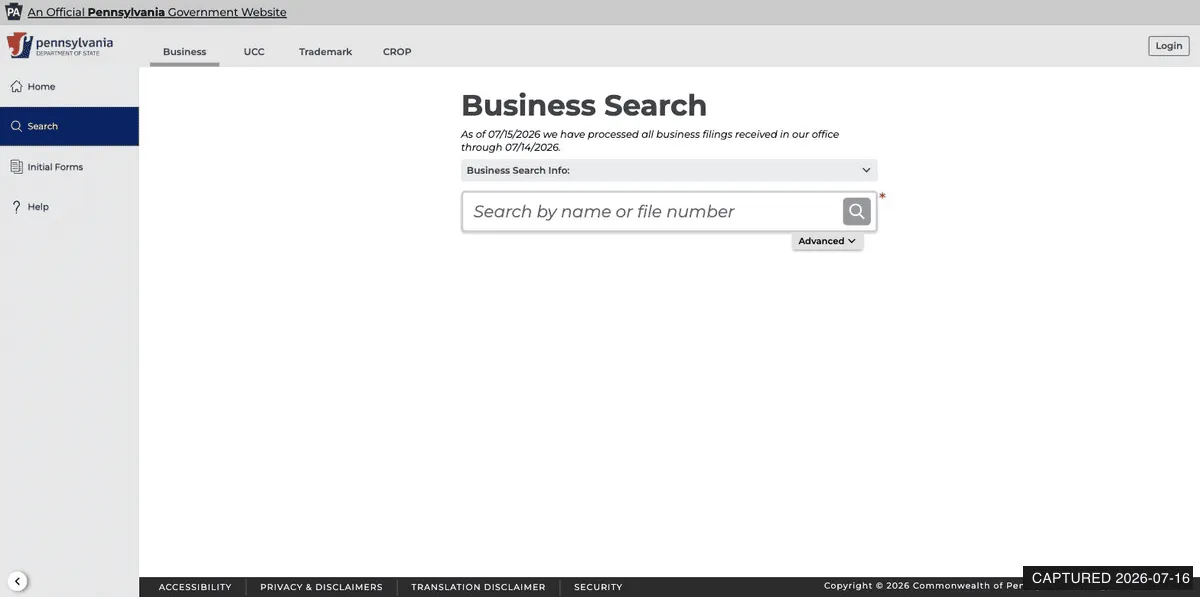
Your name must include "Company," "Limited," "Limited Liability Company," or an accepted abbreviation like "LLC," and be distinguishable from names already on file. Search existing Pennsylvania entities through the Business Filing Services search before you file.
Pennsylvania requires a registered office, a street address in the state where legal papers can be delivered, rather than a named registered agent. You can list your own Pennsylvania address, which becomes part of the public record, or contract with a commercial registered office provider (CROP) that lists its address instead.
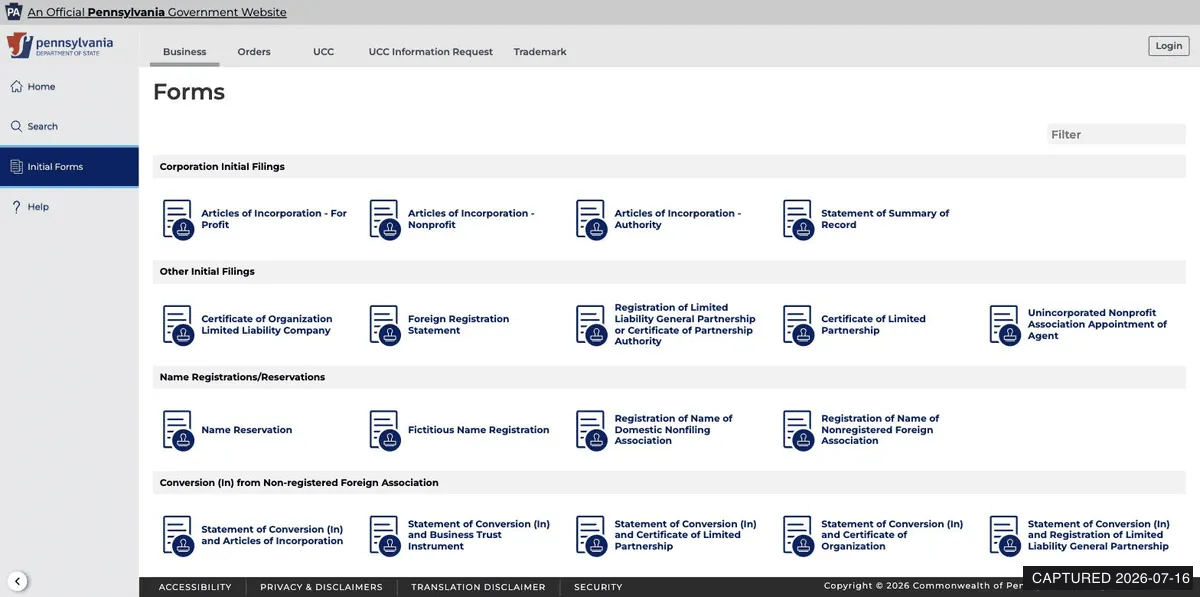
Business Filing Services lists the Certificate of Organization (Limited Liability Company) under Initial Forms; filing it online continues behind a Login. The fee is $125 by card. The Department of State's guidance says to allow up to 15 business days for processing, and online is the fastest channel.
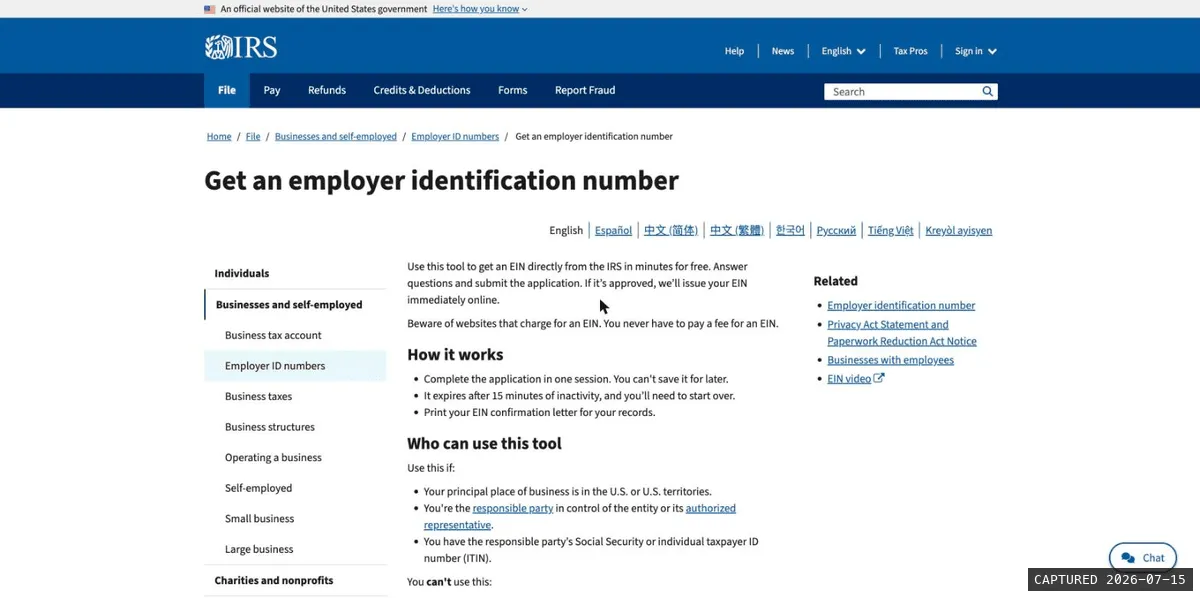
Apply for an Employer Identification Number on the IRS website once the LLC is approved. It is free and takes about ten minutes online; you need it for banking, hiring, and taxes. Ignore any site that charges for an EIN.
Pennsylvania does not require an operating agreement, but banks and partners ask for one and it settles ownership questions in writing. A single-member LLC can use a short standard agreement; multi-member LLCs should document splits and exit terms.
Pennsylvania has no general statewide business license. Cities run their own systems; Philadelphia, for example, requires a commercial activity license before a business operates there. For landscaping specifically: Pennsylvania's Home Improvement Consumer Protection Act reaches work on a private residence priced above $500, and its list of covered improvements includes landscaping, but only "of a type that is not excluded" under the act's own carve-out clause, an inclusion written by reference to its own exclusion. The exclusion applies to a landscaper certified by the state Department of Agriculture under the Plant Pest Act: that credential keeps the business outside HICPA at a private residence entirely, until the job crosses into one of two limbs the act names by hand. The first covers construction, replacement, installation, or improvement of buildings, driveways, pools, porches, garages, roofs, siding, flooring, patios, doors, windows, nondecorative fences, lighting systems, and concrete walkways. The second covers placing retaining walls, fountains, or drainage systems. Cross either line and the crew is back inside HICPA, which for a Pennsylvania home improvement contractor means registering with the Attorney General's Bureau of Consumer Protection, at $100 every two years, once prior-year home improvements totaled $5,000 or more, a general mechanism this site's Pennsylvania construction guide documents in full. The fence limb draws the sharpest line of all: a decorative fence keeps a Plant Pest Act landscaper outside HICPA, and a nondecorative one pulls them back in.
Pennsylvania LLCs file an annual report with a $7 fee, due September 30 each year. The requirement started in 2025 and replaced the old ten-year report, so many existing owners have never filed one. Open a dedicated business bank account with your filed certificate and EIN.
Same state fee either way. The difference is your time, and whose address goes on the public record.
Only sometimes. HICPA names landscaping as a covered home improvement, but a landscaper certified by the Department of Agriculture under the Plant Pest Act is excluded from the act at a private residence, unless the job includes a retaining wall, a fountain, a drainage system, landscape lighting, a concrete walkway, or a nondecorative fence. Cross one of those lines and the standard HICPA registration applies.
No, and that distinction is written into the statute itself. HICPA's exclusion for Plant Pest Act certified landscapers lists nondecorative fences among the work that pulls a company back inside the act. A decorative fence is not on that list, so installing one keeps a certified landscaper outside HICPA while a nondecorative fence brings them back under it.
Yes, since 2025. Pennsylvania replaced its old decennial report with an annual report due September 30 each year; the LLC fee is $7. The first cohort filed in 2025, so plenty of owners formed earlier have never seen the requirement. Missing it can eventually cost the LLC its good standing.
Pennsylvania words it differently: the requirement is a registered office, a Pennsylvania street address where legal papers can be delivered, not a named agent. Your own address works and becomes public record. A commercial registered office provider (CROP) lists its address instead.
Source: BusinessFormation.us analysis of U.S. Census Bureau
County Business Patterns 2023 and Nonemployer Statistics 2023
(establishment counts, NAICS 56173), and Business Formation
Statistics (monthly applications); retrieved Jul 2026.
businessformation.us/start/landscaping-business/pennsylvania/